Preston became England's newest city in 2002, yet its roots stretch back to Roman times. This guide explores five essential landmarks that tell the story of Lancashire's administrative centre, from Victorian parks to Brutalist architecture.
Preston Bus Station: A Brutalist Masterpiece
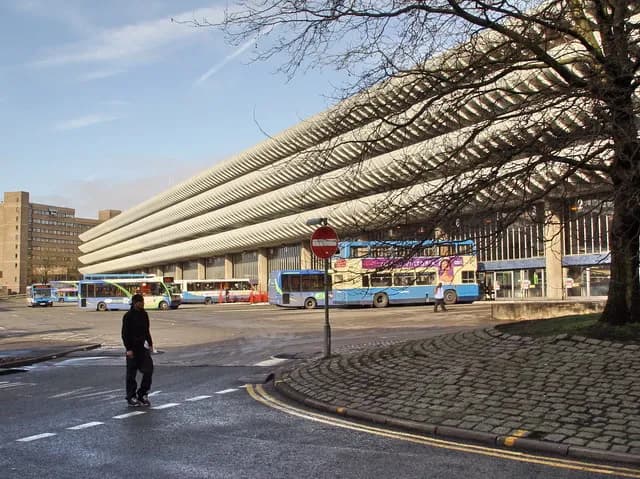
Preston Bus Station remains one of the most striking buildings in Lancashire. Built between 1968 and 1969 to designs by BDP architect Keith Ingham, the structure features sweeping concrete curves and an expansive concourse capable of accommodating 80 double-decker buses. At the time of construction, it was reputed to be the second-largest bus station in Western Europe.
The building's Brutalist style divided opinion for decades, and it faced demolition threats as part of the abandoned Tithebarn redevelopment scheme. In 2013, however, the station received Grade II listed status from Historic England, securing its future as a significant example of post-war architecture. The building has since undergone renovation, with the upper floors now converted for commercial and residential use whilst retaining the bus station at ground level.
Avenham and Miller Parks: Victorian Splendour
Avenham Park and adjacent Miller Park form one of the finest examples of Victorian parkland in North West England. Laid out by landscape architect Edward Milner in the 1860s, the parks sit within a dramatic bend of the River Ribble and feature extensive terraces, woodland walks, and formal gardens.
The parks were created following the 1862 Preston Guild, a once-in-twenty-years celebration unique to the city. The Japanese garden in Avenham Park, added in the early twentieth century, remains a particular highlight, featuring carefully placed rocks, winding paths, and mature specimen trees. The Belvedere, a raised viewing platform overlooking the river, offers one of the finest panoramas in the city.
The Harris Museum, Art Gallery and Library
The Harris dominates Preston's Market Square with its neoclassical grandeur. Opened in 1893, the building was funded by a bequest from local solicitor Edmund Harris and designed by architect James Hibbert. The collections span fine art, decorative arts, costume, and local history, with particular strengths in British watercolours and contemporary craft.
The museum closed for major renovation in 2022, with works expected to complete in 2025. When it reopens, the Harris will offer improved gallery spaces, enhanced learning facilities, and restored public areas including the magnificent first-floor reading room with its domed ceiling and original fittings.
Preston Guild Hall and Charter Theatre
Preston Guild Hall opened in 1973 as a purpose-built entertainment venue in the Brutalist style, complementing the nearby bus station. The complex contains two performance spaces: the main Guild Hall and the smaller Charter Theatre. For decades it served as the city's primary concert and theatrical venue, hosting everything from rock concerts to pantomime.
Following a period of closure and uncertainty, the venue was purchased by local businessman Simon Rigby in 2014. It continues to operate as an entertainment complex, though its long-term future remains tied to broader regeneration plans for the city centre.
The Ribble Valley and City Docks
The River Ribble has shaped Preston's development since the town's earliest days. The former Preston Docks, opened in 1892 as a port for ocean-going vessels, closed to commercial traffic in the 1980s and have since been redeveloped as a residential and leisure area. The marina now provides moorings for pleasure craft, whilst the surrounding area includes retail units, restaurants, and apartment blocks.
The Ribble itself remains a vital natural habitat, supporting significant populations of wildfowl and serving as an important recreational resource for anglers, walkers, and cyclists. The Lancashire Coastal Way long-distance footpath passes through the city along the riverbank, connecting Preston to the Ribble Estuary National Nature Reserve.
About the Preston Guild
No guide to Preston would be complete without mentioning the Preston Guild, the city's unique civic festival held once every twenty years. Dating back to 1179, the Guild celebrates Preston's royal charter and the granting of trading privileges. The 2012 Guild was the most recent celebration, featuring processions, concerts, and community events throughout the city. The next Guild is scheduled for 2032.
The Guild's rarity makes it one of the most significant cultural events in England, drawing visitors from across Lancashire and beyond. It remains a powerful symbol of Preston's identity and historical importance within the county.