The Preston Guild is the only surviving guild celebration in the United Kingdom, a tradition that has endured for more than eight centuries. First granted by royal charter in 1179, this civic festival occurs just once every twenty years, making it a truly once-in-a-generation event for the people of Preston.
A Royal Charter From 1179
King Henry II conferred the right to hold a Guild Merchant upon the burgesses of Preston in a charter dated 1179. This granted the town the status of a market town and established an organisation of traders, craftsmen and merchants who held a monopoly on trade within Preston. Only members of the Guild Merchant could carry out crafts or conduct business in the town.
The Guild operated at irregular intervals until 1328, when it was decreed that subsequent guilds should be held every twenty years. From 1542 to 1922, an unbroken series of guilds took place each generation. The cycle was interrupted only in 1942, when wartime conditions forced a cancellation that broke a four-hundred-year sequence. The tradition resumed in 1952 and has continued without interruption since.
From Trade Monopoly to Civic Festival
In 1790, freedom of trade was introduced, abolishing the economic need for a Guild and the exclusive rights of burgesses. Yet the people of Preston continued to celebrate. What had begun as a commercial regulatory body transformed into a prestigious social occasion, evolving into the festival recognised today.
The expression "(once) every Preston Guild" has passed into common parlance across Lancashire, used to describe something that happens very infrequently. The phrase captures the unique nature of an event that marks the passing of generations.
Guild Week Traditions and Ceremonies
Guild week traditionally begins with the opening of the Guild Court on the first Monday after the feast of the Beheading of John the Baptist, celebrated on 29 August. This timing has been observed since the sixteenth century.
The Guild Court ceremony remains at the heart of the celebration, a tradition as old as the Guild itself. Historically, anyone claiming membership had to swear loyalty to the Mayor and Guild Merchant in a public court. Their credentials were checked, and if found eligible, they were admitted or re-admitted as a burgess upon paying a small fee. Today, the ceremony continues in symbolic form.
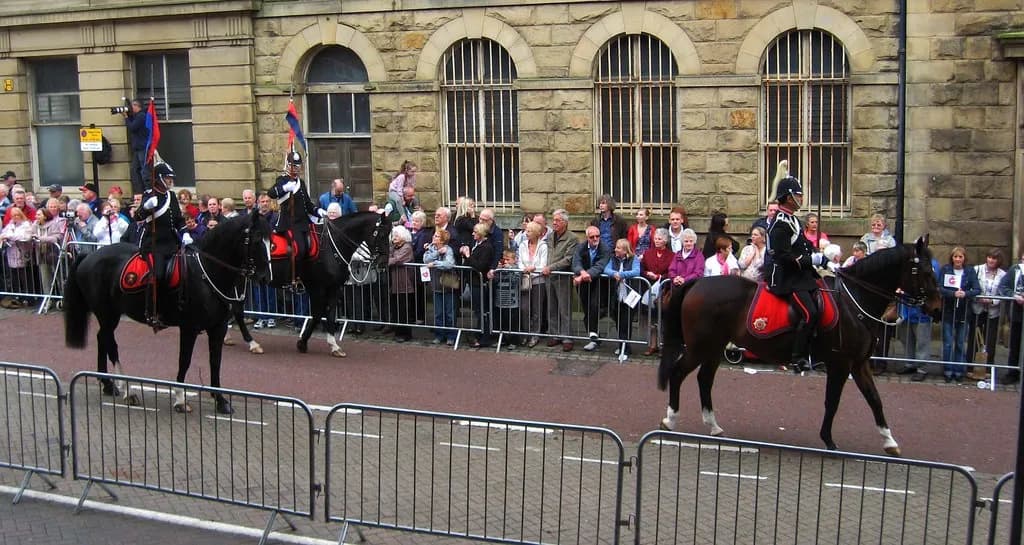
Processions through the city streets form the most visible element of the Guild. Participants march through Preston's historic centre, passing landmarks including the Flag Market, Fishergate and the Town Hall. The trades procession brings together local businesses, organisations and community groups in a display of civic pride.
Street parties are held throughout the locality during Guild week, with residents gathering to mark the occasion. A highlight remains the great Mayoral banquet, held after the civic procession on the opening day.
The 2012 Guild and What Is to Come
The most recent Preston Guild took place in 2012, formally opened on 2 September with a mayoral proclamation and the return of "friendship scrolls" that had travelled the world in the months preceding the event.
The 2012 Guild demonstrated how the tradition has adapted to modern times whilst preserving its historic core. Major concerts were held at Avenham Park, the Grade II* listed public park designed by Edward Milner in the 1860s. The Human League performed one evening, whilst "Proms In The Park" featured opera singer José Carreras, classical crossover artist Katherine Jenkins and the Manchester Camerata orchestra.
The Lancashire Evening Post declared it the "Best Guild Ever!" in its headline on Monday 10 September 2012. Twenty-six Guilds have surviving records, with the first eyewitness account dating from 1682.
Looking Ahead to 2032
The next Preston Guild is scheduled for 2032, maintaining the twenty-year cycle that has defined the tradition for nearly seven centuries. For many Prestonians, it will be the first Guild they experience as adults; for others, it may be the last they see in their lifetime.
The Guild has survived wars, economic upheavals and social transformation. As the official history notes, "change and continuity have been its hallmarks for eight centuries." What began as a medieval trade monopoly has become a celebration of community, identity and the enduring spirit of what eighteenth-century chronicler Edmund Calamy called "Proud Preston."